
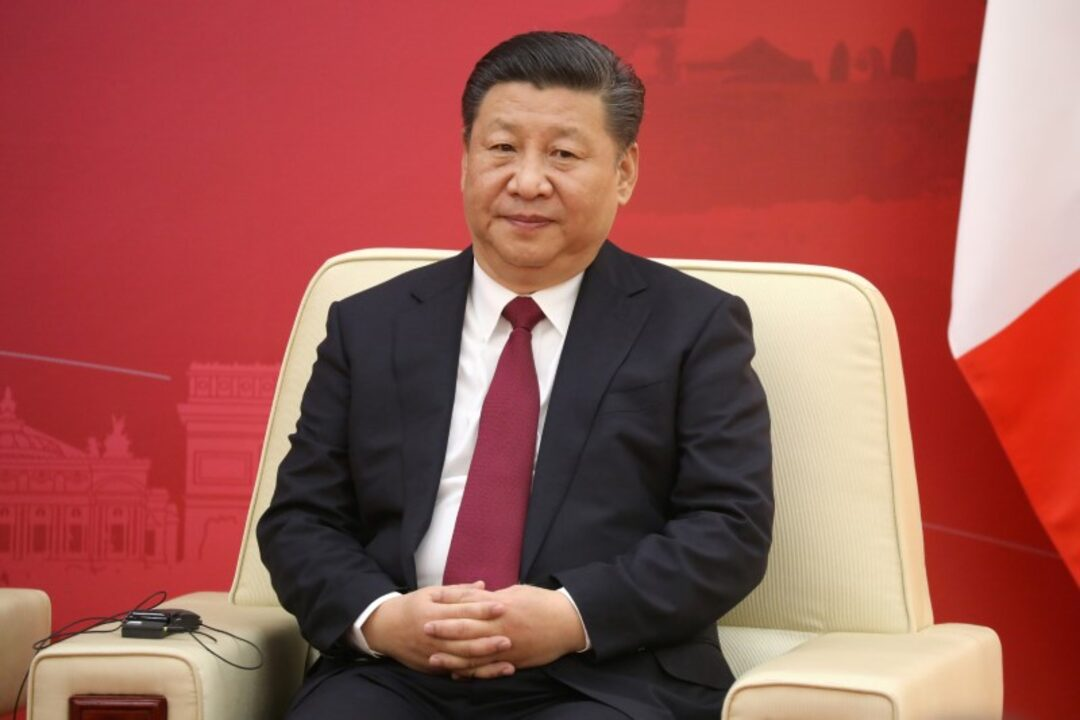
Chinese President Xi Jinping met with Kuomintang party chair Cheng Li-wun in Beijing on Friday.
Marking the first meeting between the Chinese leader and a sitting Taiwanese opposition figure in nearly a decade.
According to a readout released by Chinese state media, Xi stated that Beijing “welcomes any proposals conducive to the peaceful development of cross-strait relations,” as per a CNBC translation of the Chinese statement.
He also reiterated that “‘Taiwan independence’ is the primary threat undermining stability across the Taiwan Strait,” urging political leaders on both sides to oppose “separatism and foreign interference.”
Beijing signals preference for stability and dialogue
The tone of Beijing’s statement suggests a possible recalibration in its messaging, according to Zhiwei Zhang, president and chief economist at Pinpoint Asset Management.
He said, “The message reduces the risk of military conflict across the Taiwan Strait and is beneficial for both mainland China and Taiwan,” adding that it reflects Beijing’s preference for peaceful engagement.
Xi emphasised that mainland China and Taiwan share deep cultural and ethnic ties, asserting that political divisions cannot sever these links.
He also reaffirmed that the “One China” principle remains the non-negotiable foundation for any future engagement.
The Chinese president further called for expanded economic, trade, and cultural exchanges, pledging to deepen “political mutual trust” and maintain open communication channels.
Cheng positions KMT as a dialogue partner
Cheng, who assumed leadership of the KMT in October, visited Beijing amid heightened military and political tensions across the Taiwan Strait.
Her trip is widely seen as part of the party’s effort to establish itself as a credible interlocutor with Beijing ahead of Taiwan’s 2028 presidential election.
During the meeting, Cheng said, “The great rejuvenation of the Chinese nation is the shared rejuvenation of people on both sides of the strait,” according to Taiwanese local media.
She also called for building sustainable mechanisms for dialogue and cooperation, adding that both sides should move beyond political confrontation to prevent a war.
Cheng described her visit as part of a broader strategy of “deterrence through dialogue,” signalling that the KMT would aim to resume cross-strait exchanges, including tourism and political engagement, if it were to return to power.
Political divisions and security concerns persist
However, the visit drew criticism from lawmakers aligned with Taiwan’s ruling Democratic Progressive Party, who accused Cheng of misrepresenting public opinion and undermining national security.
According to Michael Feller, Cheng’s leadership reflects a strategic appeal to shared Chinese heritage, alongside concerns within Taiwan’s business community that President Lai Ching-te’s pro-independence stance may have escalated tensions with Beijing unnecessarily.
The KMT has also stalled a proposed $40 billion defence budget put forward by Lai, aimed at strengthening Taiwan’s air defence capabilities against potential military threats from China.
Geopolitical context and future risks
The meeting comes ahead of a planned visit by Donald Trump in May, during which he is expected to meet Xi to discuss issues including trade, fentanyl flows, and Taiwan.
Beijing continues to regard Taiwan as part of its territory and frames the issue as an internal matter, frequently criticising what it views as interference from the United States and its allies.
While recent global developments, including US actions in Venezuela and Iran, have drawn comparisons to China’s posture toward Taiwan, analysts suggest the risk of immediate conflict remains limited.
“The risk of sudden mainland aggression against Taiwan is lower than many in Washington commonly assume,” said Gabriel Wildau.
“China’s leadership believes the balance of military power and overall strategic influence is shifting inexorably in Beijing’s favor.”
However, Wildau noted that longer-term risks remain.
If the DPP secures another presidential term in 2028 and Xi consolidates power further, “Xi might conclude that peaceful unification is no longer viable,” he said.
The post Xi raises Taiwan independence alarm in rare cross-strait talks appeared first on Invezz
