
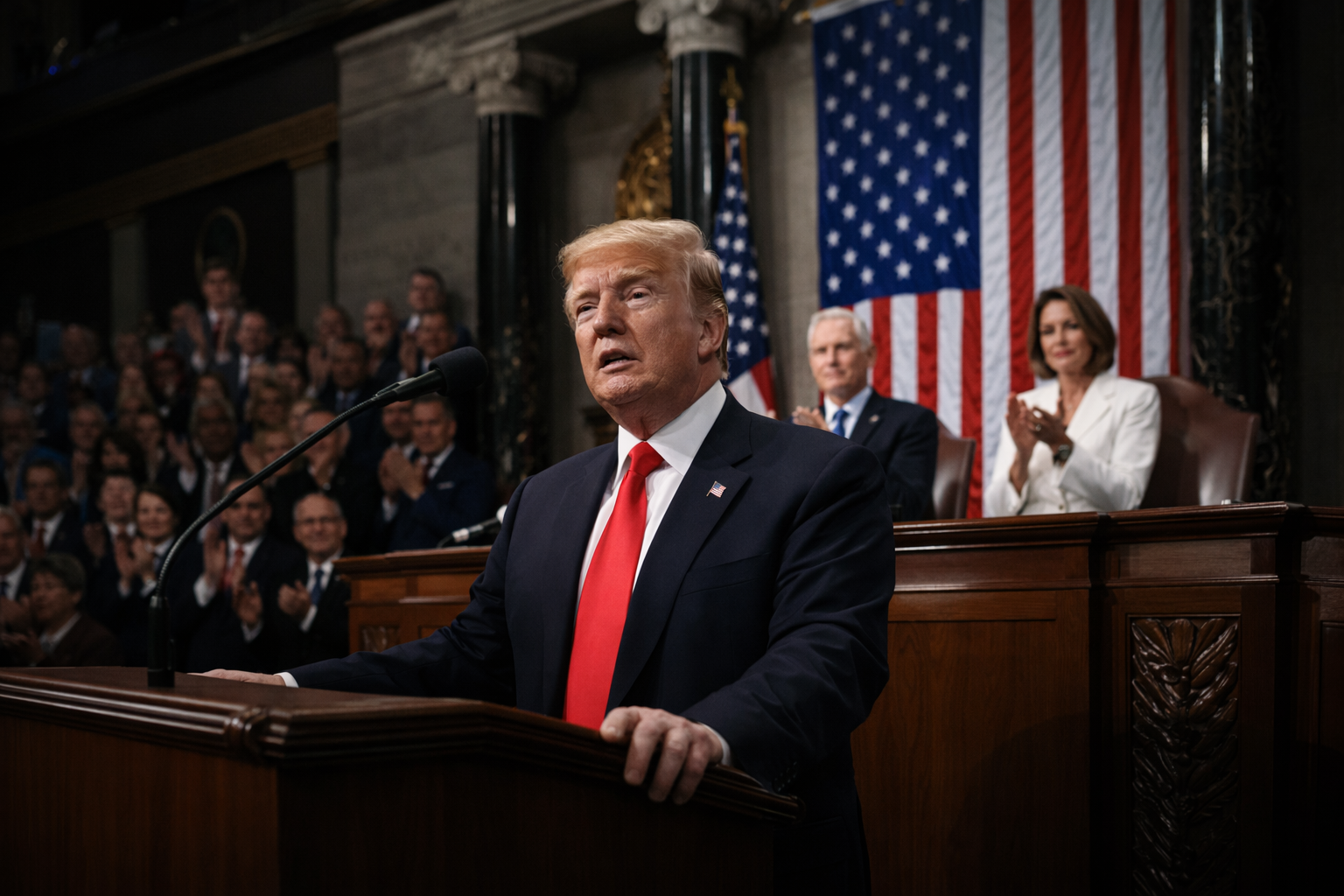
President Donald Trump delivers his first State of the Union address of his second term on Tuesday night with Washington still digesting a major reset in trade policy and a jumpier global backdrop.
Days after the Supreme Court struck down most of his sweeping emergency tariffs, Trump is expected to use the address to argue the country is stronger, tougher, and winning again, while also laying the groundwork for what comes next.
For markets and voters alike, the subtext is simple: where does he go from here?
The economy: A boast with an asterisk
Trump is likely to highlight jobs, investment and the idea that US growth remains durable, even as many households still feel squeezed by prices.
He will almost certainly try to frame the economy as proof that his policy mix is working, and that any remaining pain is the hangover from prior years.
The risk for the White House is tone of the speech sounds too celebratory, while voters are still focused on affordability, it can land as disconnected rather than confident.
Tariffs: The elephant in the chamber
Trade will be the most delicate part of the night because the legal ground shifted under Trump’s signature tool.
The Supreme Court’s ruling limiting his ability to impose sweeping tariffs under emergency powers was a clear setback, and Trump is expected to attack it.
Complicating the optics, a new 10% global tariff went into effect just after midnight Tuesday, meaning the speech will unfold with businesses and trading partners already recalculating costs.
He may also use the moment to signal alternative paths to tariffs.
The White House is considering new “national security” tariffs after the court ruling, keeping investors on alert for a second wave of policy surprises, even if the original legal route is constrained.
Immigration: Familiar messaging, higher stakes
Expect Trump to return to his most reliable political script: border security, enforcement, and highly specific anecdotes meant to make the issue visceral.
Immigration is where his rhetoric tends to be most disciplined: short, repeatable lines designed for clips and campaign ads.
What’s different this time is the political context: with policy whiplash already a market factor, the White House will want to project control rather than chaos.
Iran and national security: Pressure without specifics
Foreign policy is likely to revolve around deterrence and leverage, especially toward Iran.
Trump recently said he is “considering” a limited military strike on Iran, but offered few details.
The reports claim that a second US aircraft carrier was nearing the region as Trump warned of “bad things” if Iran does not make a deal.
If Trump addresses Iran, the watchpoint is whether he clarifies the threshold for action or keeps it intentionally vague to maximize pressure.
What State of the Union speeches rarely do is change minds overnight.
What they often do is reveal priorities, and this one should show how Trump plans to navigate a post-ruling tariff landscape while keeping his base energized and investors guessing.
The post Trump’s State of the Union address: here’s what to expect appeared first on Invezz
